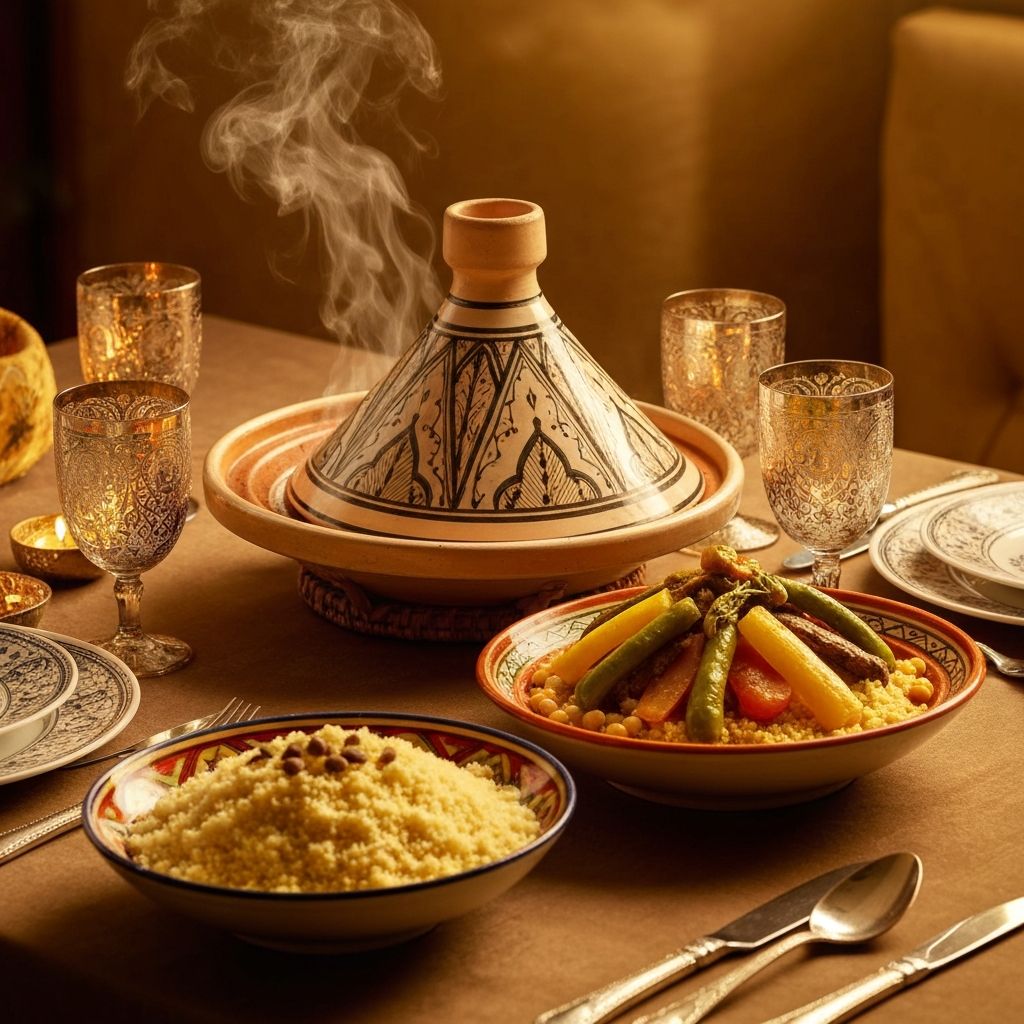
The Art of Moroccan Cuisine: A Journey Through Spice, Tradition, and Innovation
Moroccan cuisine represents one of the world most sophisticated culinary traditions, yet it remains largely misunderstood by Western travelers. Most visitors encounter Moroccan food in touristy restaurants serving simplified, standardized versions of traditional dishes. True Moroccan gastronomy—the layered complexity of flavors, the philosophical approach to ingredients, the ritualistic preparation—remains largely hidden from outsiders. At Zoubir Tours, we believe culinary experience should be central to any luxury journey. We arrange exclusive opportunities to learn from master chefs, dine in private homes with Moroccan families, and explore markets and production facilities alongside food experts.
Understanding Moroccan Culinary Philosophy
Moroccan cuisine reflects centuries of trade routes, cultural exchanges, and agricultural traditions. The cuisine balances sweet and savory—tagines combine meat with dried fruits and warm spices. It honors simplicity—a perfect couscous requires only a handful of quality ingredients and proper technique. It respects seasonality—dishes change with the calendar, incorporating whatever the market offers at its peak. Most importantly, Moroccan cuisine is social; it's traditionally served family-style, shared among loved ones, eaten with hands, and accompanied by conversation and connection. When you understand these principles, you understand why Moroccan food carries such profound meaning. A tagine isn't merely a stew; it's an expression of philosophy, history, and care. For the luxury traveler seeking genuine culinary education, these deeper meanings matter far more than exotic novelty.
The Master Chef Experience
Through our partnerships, we arrange private sessions with Morocco most respected chefs—individuals who have dedicated lifetimes to perfecting traditional recipes, understanding ingredient sourcing, and innovating within the bounds of authentic tradition. These aren't cooking classes in the conventional sense; they're intimate collaborations. You might spend a morning in a chef's private kitchen while they guide you through preparing three courses, explaining not just the technique but the philosophy behind each step. You might visit the spice souk together, learning to distinguish varieties of cumin, cinnamon, and ginger from different regions, understanding how origin affects flavor. You might harvest ingredients from the chef private garden, then cook with them immediately to understand how freshness impacts the final dish. The experience culminates in sitting down to eat what you've prepared together, often joined by the chef family, transforming cooking into genuine connection and cultural exchange.
Dining in Private Moroccan Homes
Some of our most profound culinary experiences happen in private Moroccan homes. These aren't restaurants; they're invitations into family life. A Moroccan mother, renowned in her community for her cooking, welcomes you into her kitchen and prepares lunch while sharing family stories and culinary secrets. You might spend the afternoon preparing together, then dine as part of her extended family circle. These experiences require careful relationship-building and significant advance planning—they can't be arranged spontaneously or commercially. But for travelers willing to be genuine guests rather than customers, these dinners create memories and connections that surpass any restaurant experience. You're not consuming food; you're participating in the daily ritual of family life, understanding how cooking embodies love, tradition, and cultural identity.
Spice Markets and Ingredient Sourcing
Morocco spice markets—the souks—represent sensory experiences that most tourists miss entirely. Walking through a traditional souk with a knowledgeable guide feels like entering another world: narrow alleys overflow with fragrant mountains of spices in every color imaginable, merchants call out their offerings, and the air itself seems flavored. Our culinary guides help you understand what you're seeing: how to distinguish high-quality saffron from inferior varieties, why Moroccan cumin differs from Indian cumin, how to select the perfect preserved lemons, and what makes certain markets' preserved olives superior to others. You learn which merchants have cultivated reputations across generations, which spices are seasonal, how to negotiate fairly, and how to bring your purchases home properly. This knowledge transforms the souk from a tourist attraction into a sophisticated exploration of flavor and tradition.